
As the heart of the car, the car engine has a complex and precise structure and is the core of the car's power source. Understanding the main structure and functions of the engine components not only helps us better understand the working principle of the car but also helps us with daily maintenance and troubleshooting. The following will briefly introduce the main structure and functions of the engine components.
1. Overall structure of the engine
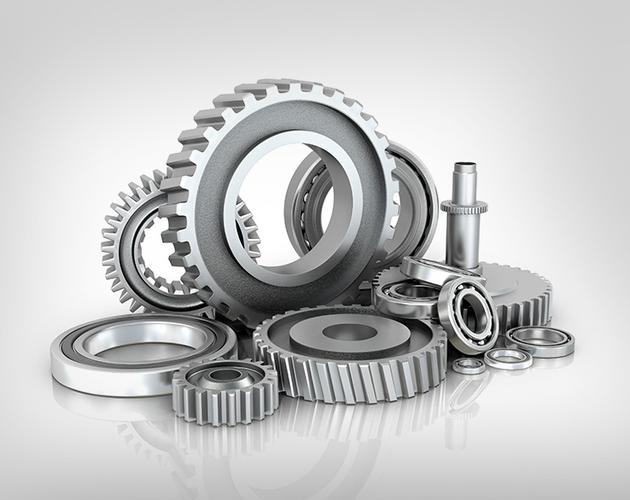 he car engine is generally composed of the crankshaft connecting rod mechanism, valve mechanism, fuel supply system, cooling system, lubrication system, and ignition system. Among them, the crankshaft connecting rod mechanism and the valve mechanism are the basic components of the engine, responsible for converting the thermal energy produced by the combustion of fuel into mechanical energy; the fuel supply system is responsible for mixing fuel and air in a certain proportion and providing it to the combustion chamber; the cooling system and lubrication system are responsible for temperature control and lubrication inside the engine, ensuring normal engine operation; the ignition system is responsible for igniting the mixed gas at the right time to ensure complete combustion of the fuel.
2. Main components and their functions
Crankshaft connecting rod mechanism: mainly consists of pistons, connecting rods, and crankshafts. The piston moves up and down inside the cylinder, driving the crankshaft to rotate through the connecting rod, thereby generating power. The crankshaft is responsible for converting the reciprocating motion of the piston into rotational motion, providing power for the car.
Valve mechanism: includes intake valves, exhaust valves, valve springs, valve guides, etc. Its main function is to control the entry of air and fuel and the exhaust of exhaust gas to ensure that the engine can operate normally.
Fuel supply system: mainly includes carburetors, injectors, gasoline pumps, etc. The carburetor or injector is responsible for mixing gasoline with air in a certain proportion, while the gasoline pump is responsible for transporting gasoline from the fuel tank to the carburetor or injector.
 ooling system: includes radiators, water pumps, water jackets, thermostats, etc. Its main function is to carry away the heat generated by the engine during operation through the circulation of the cooling fluid, maintaining the normal operating temperature of the engine.
Lubrication system: includes oil pumps, oil filters, oil coolers, etc. Its main function is to provide lubricating oil for the moving parts of the engine, reduce wear, and extend the service life of the engine.
 Ignition system: mainly includes ignition coils, spark plugs, distributors, etc. Its main function is to provide high-voltage spark to ignite the mixed gas, causing the fuel to burn and produce power.
3. Summary
The car engine is a precision mechanical system, where its various components work together to complete the task of converting the thermal energy produced by the combustion of fuel into mechanical energy. Understanding the main structure and functions of the engine components is helpful for us to better maintain and care for cars, ensuring that cars can run safely and efficiently. At the same time, this is also the foundation for learning car maintenance technology.